

Mold Removal in New Hyde Park, NY
New Hyde Park's year-round humidity and winter moisture buildup create conditions where basements—the foundation style common to most homes in the area—become prone to condensation and mold growth due to limited ventilation and groundwater proximity. Mold removal becomes essential when these conditions allow growth to take hold, as unaddressed mold can affect indoor air quality and material integrity. Blair Mold Remediation connects New Hyde Park property owners with local mold removal providers who assess the extent of growth and execute thorough remediation, helping restore a healthier indoor environment.
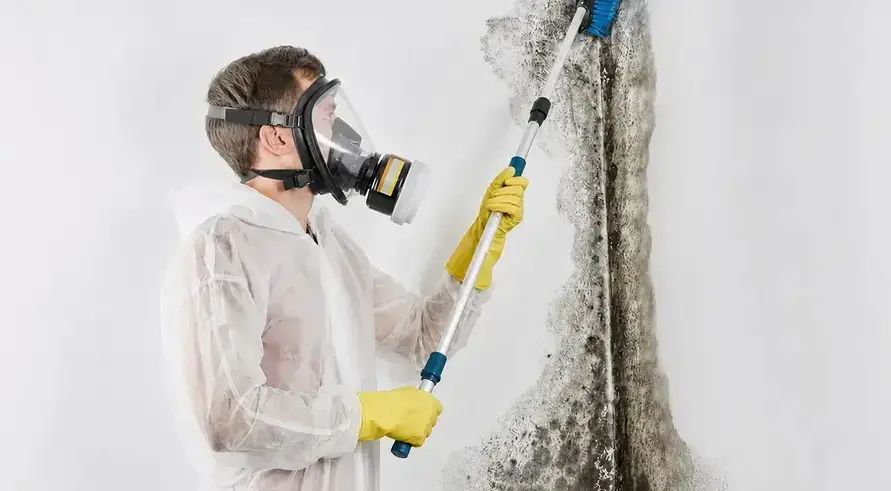
What gets cleaned in a home, and what comes out
Two questions decide the scope of any mold job: what is it growing on, and how much of it is there. The EPA publishes an answer for both, and this is that guidance applied to the materials you would expect in a home.
| Material | Under 10 sq ftabout a cabinet door, or one ceiling tile | 10 to 100 sq ftroughly one wall, or a small bathroom | Over 100 sq ftmore than one room's worth of surface |
|---|---|---|---|
| Wallboarddrywall and plasterboardEPA, Table 2 | HEPA vacuum | HEPA vacuumRemove and discard | HEPA vacuumRemove and discard |
| Wood surfacesframing, subfloor and trimEPA, Table 2 | Wet vacuumDamp wipeHEPA vacuum | Wet vacuumDamp wipeHEPA vacuum | Wet vacuumDamp wipeHEPA vacuumRemove and discard |
| Non-porous, hard surfacestile, glass, metal and sealed hard surfacesEPA, Table 2 | Wet vacuumDamp wipeHEPA vacuum | Wet vacuumDamp wipeHEPA vacuum | Wet vacuumDamp wipeHEPA vacuum |
| Carpet and backingcarpet, backing and padEPA, Table 2 | Wet vacuumHEPA vacuum | Wet vacuumHEPA vacuumRemove and discard | Wet vacuumHEPA vacuumRemove and discard |
| Concrete or cinder blockslabs, foundation walls and blockEPA, Table 2 | Wet vacuumHEPA vacuum | Wet vacuumHEPA vacuum | Wet vacuumHEPA vacuum |
What those methods mean, in EPA's words
- Wet vacuum
Wet vacuums are vacuum cleaners designed to collect water. They can be used to remove water from floors, carpets and hard surfaces where water has accumulated.
EPA, cleanup methods- Damp wipe
Mold can generally be removed from nonporous (hard) surfaces by wiping or scrubbing with water, or water and detergent.
EPA, cleanup methods- HEPA vacuum
HEPA (High-Efficiency Particulate Air) vacuums are recommended for final cleanup of remediation areas after materials have been thoroughly dried and contaminated materials removed.
EPA, cleanup methods- Remove and discard
Building materials and furnishings that are contaminated with mold growth and are not salvageable should be double-bagged using 6-mil polyethylene sheeting.
EPA, cleanup methods
Removed and replaced, whatever the area
- Fiberglass or other insulation — batt or blown insulation.
Fiber glass, or any other insulation material that is wet or visibly moldy (or if an unacceptable odor is present) should be removed and replaced by a qualified heating and cooling system contractor.
EPA, air duct cleaningEPA states this in its heating-and-cooling guidance and it is quoted here as written. Its water-damage table reaches the same conclusion for both fiberglass and cellulose insulation.
These guidelines are for damage caused by clean water. If you know or suspect that the water source is contaminated with sewage, or chemical or biological pollutants, then Personal Protective Equipment and containment are required by OSHA.
EPA, Table 1Porous materials that are wet and have mold growing on them may have to be discarded.
EPA, cleanup methodsMold can grow on wood, drywall, carpet and furniture if they remain wet for more than 24 hours.
EPA, flood cleanup
What gets saved depends less on how the mold looks than on what the material is and how long it stayed wet — which is why two rooms with identical staining can need very different work. EPA's own framing is two-dimensional: the material on one axis, the size of the affected area on the other. Nothing in it turns on color or species.
Roughly 48.6 inches of rain reaches New Hyde Park across about 81.8 days, with May the wettest of them.Source: NOAA 1991-2020 Climate Normals, OCEANSIDE, NY US station (3.5 mi from New Hyde Park)
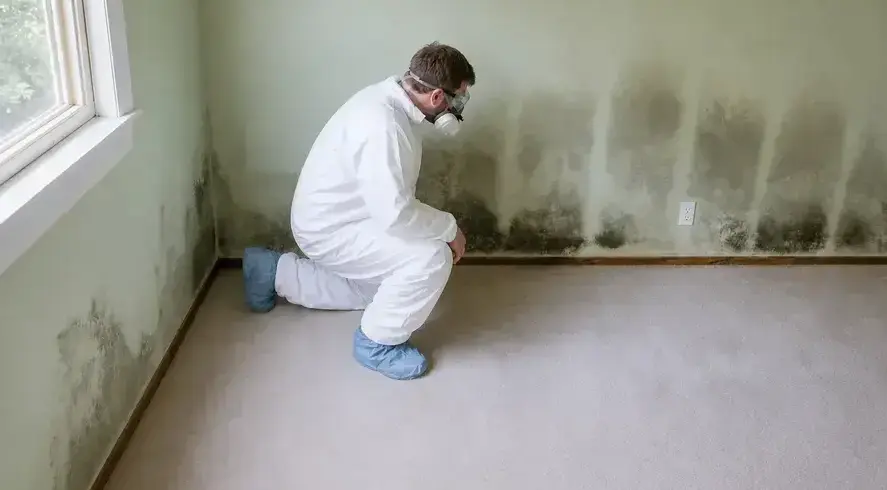
Mold Removal Demand in New Hyde Park, NY
New Hyde Park homeowners face persistent moisture challenges year-round due to Long Island's humid climate and seasonal weather patterns. Basements in particular become breeding grounds for mold growth—the region's older homes typically feature full basements where limited airflow, groundwater proximity, and condensation create ideal conditions for mold to develop and spread. Winter's damp conditions and summer's moisture-laden air compound the problem, making mold removal not just a matter of property maintenance but an essential step in protecting indoor air quality and structural integrity.
Blair Mold Remediation connects New Hyde Park property owners with local independent providers who specialize in thorough mold removal. These providers assess the full scope of affected areas, employ proper containment during removal to prevent spore dispersal, and address moisture sources to help reduce the likelihood of recurrence. Whether mold is visible in a basement, hidden behind walls, or suspected after water damage, the goal is complete removal and restoration of healthy indoor conditions. When you reach out, you'll be connected promptly with a local professional ready to evaluate your property and outline a removal plan tailored to your situation.
Why New Hyde Park Property Owners Choose Blair Mold Removal
Fast Local Mold Removal
Blair connects you with independent mold removal providers in New Hyde Park who respond quickly to your call. Same-day or next-day assessment and containment help stop mold from spreading through your property.
Thorough Mold Removal Process
Independent providers in the Blair network use targeted containment and removal techniques to address mold at its source. Detailed post-removal inspection confirms the mold removal work is complete and your indoor air quality restored.
Clear Communication on Mold Removal
Blair's local mold removal partners explain exactly what they find, how they'll remove it, and what to expect next. Transparent communication throughout the process keeps you informed and confident in your mold removal decision.
Mold Removal for Long Island Basements
New Hyde Park's year-round humidity and winter dampness create ideal conditions for mold growth in basements. Blair connects you with mold removal specialists who understand basement condensation and moisture control specific to Long Island properties.
How Our Mold Removal Process Works
Schedule Your Mold Removal Inspection
Contact Blair Mold Remediation to arrange a mold removal assessment at your New Hyde Park property. A local independent provider will inspect your home to identify mold growth, moisture sources, and affected areas.
Mold Removal Assessment & Planning
The provider evaluates the scope of mold removal needed, paying close attention to basements where condensation and moisture accumulation commonly occur in Long Island homes. You'll receive a detailed plan for safe mold removal tailored to your property's specific conditions.
Complete Mold Removal & Verification
The independent provider executes targeted mold removal, addresses underlying moisture issues, and verifies that affected areas are properly cleaned and dried. Follow-up guidance ensures your indoor air quality remains protected moving forward.
Dealing with Mold Removal in New Hyde Park? Get fast, professional help.
Call Now — (516) 588-7004Mold Removal Challenges in New Hyde Park Homes
New Hyde Park's location on Long Island means homes here experience year-round humidity and persistent moisture conditions that create ideal environments for mold growth. Summers bring high humidity levels, while winters often leave interiors damp and poorly ventilated—both seasons drive moisture accumulation indoors. Most properties in the area were built with full basements, which are particularly vulnerable to mold development. These below-grade spaces sit close to groundwater and naturally collect condensation when airflow is limited, making basement mold removal a frequent necessity for homeowners and property managers throughout the community.
Effective mold removal in New Hyde Park requires understanding how these moisture patterns interact with older home construction and basement design. The independent local providers Blair Mold Remediation connects you with assess how your property's specific layout and seasonal moisture challenges contribute to mold risk, then develop targeted removal and prevention strategies. Addressing basement moisture early—before mold establishes itself—protects indoor air quality and prevents costly damage to structural materials and belongings.
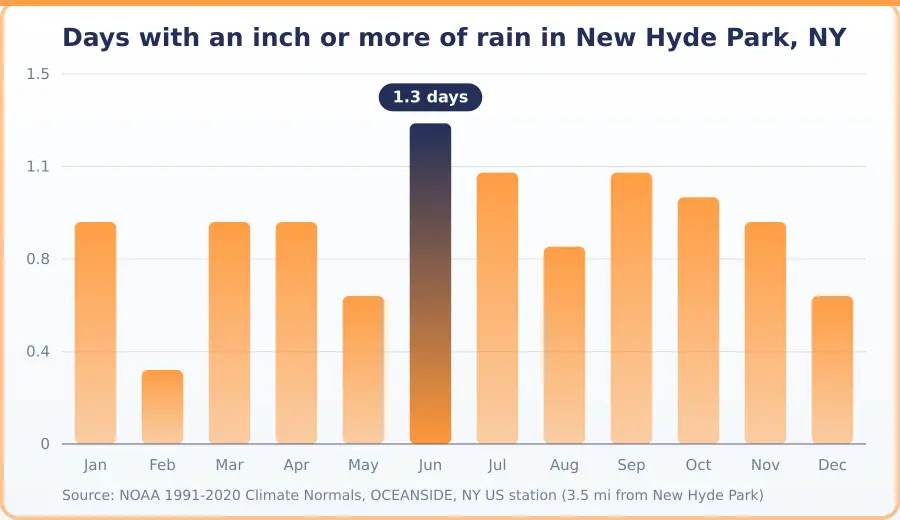
| Period | Days with an inch or more of rain (days) |
|---|---|
| Jan | 0.9 |
| Feb | 0.3 |
| Mar | 0.9 |
| Apr | 0.9 |
| May | 0.6 |
| Jun | 1.3 |
| Jul | 1.1 |
| Aug | 0.8 |
| Sep | 1.1 |
| Oct | 1 |
| Nov | 0.9 |
| Dec | 0.6 |
Source: NOAA 1991-2020 Climate Normals, OCEANSIDE, NY US station (3.5 mi from New Hyde Park). Retrieved October 5, 2026.
Seasonal Mold Removal Needs Across New Hyde Park
Spring: Foundation Thaw
Melting snow and spring rainfall increase groundwater pressure around basements, triggering fresh condensation and mold colonization on walls and stored items. Blair connects property owners with local mold removal providers who identify and remediate these emerging growth zones before they spread through summer.
Summer: Humidity Peaks
Long Island's summer humidity saturates indoor air, and basements become prime mold incubators due to limited airflow and proximity to groundwater. Mold growth accelerates rapidly in these conditions. Blair's referral network links homeowners with removal specialists equipped to contain, extract, and dry affected areas before damage deepens.
Fall: Moisture Trapping
As outdoor temperatures drop, warm indoor air meets cooler basement surfaces, creating condensation that feeds mold colonies already established over summer. Mold removal becomes urgent before winter seals homes tight, trapping moisture and spore circulation. Blair connects property owners with local providers for swift assessment and remediation.
Winter: Poor Ventilation
Sealed homes and reduced outdoor airflow concentrate indoor moisture, while heating systems and damp basements create ideal mold growth conditions. Mold removal delays during winter lead to extensive spring damage. Blair's local network helps property owners address active mold quickly, restoring safer indoor air quality before seasonal thaw arrives.
Related Services
Mold Removal FAQs — New Hyde Park, NY
Mold removal typically begins with assessment of affected areas, followed by containment to prevent spores from spreading. The independent provider will remove contaminated materials, clean surfaces, and apply antimicrobial treatments where needed. Depending on the scope, this may involve specialized equipment and careful disposal. You'll receive guidance on ventilation and moisture control going forward to support long-term indoor air quality.
Blair Mold Remediation works to connect you with local mold removal providers in New Hyde Park promptly. Response times depend on provider availability in your area, but the goal is to get you matched with someone ready to assess and address your mold concern without unnecessary delay.
Pricing for mold removal depends on several factors: the size and location of affected areas, how deeply mold has penetrated materials, whether structural components need removal or just surface cleaning, and the complexity of containment required. Your local provider will assess your specific situation and explain cost factors before work begins.
Before mold removal begins, clear the affected area of personal items if possible and ensure the provider has safe access. You may be asked to close doors to isolate the space and keep family members and pets away during containment and removal. Your provider will give you specific preparation instructions based on where the mold is located and the scope of work.
After mold removal, control moisture by fixing leaks promptly, running exhaust fans in bathrooms and kitchens, and maintaining good air circulation. In basements, which are common in New Hyde Park homes, ensure proper drainage around the foundation and consider a dehumidifier if condensation builds up. Regular inspection of damp-prone areas helps catch early moisture problems before mold returns.
Mold growth risks in New Hyde Park remain elevated throughout the year due to the region's humid climate and moisture conditions. Summer brings high humidity that promotes active growth, while winter's poor ventilation and condensation—especially in basements—create ideal conditions for dormant spores to activate. Year-round attention to moisture control and prompt removal when discovered is key.
Homeowner Safety Toolkit
Verify Your New Hyde Park, NY Mold Remediation Company
Before you hire anyone, use these independent national resources to confirm credentials, standards, and track record.
IICRC
Publishes the S520 standard for professional mold remediation. Confirm a company's technicians hold real, current IICRC certification before you hire them.
Verify CertificationCDC
Covers the health effects of mold exposure and safe cleanup practices, separate from the remediation work itself — useful if anyone in the home has respiratory symptoms.
Mold Health GuideBBB
Look up any mold remediation company's complaint history, customer reviews, and accreditation status — a free, independent check before you hire.
Check StandingDealing with Mold Removal in New Hyde Park, NY? Call (516) 588-7004 for 24/7 help.
Call Now — (516) 588-7004Areas We Serve in New Hyde Park, New York
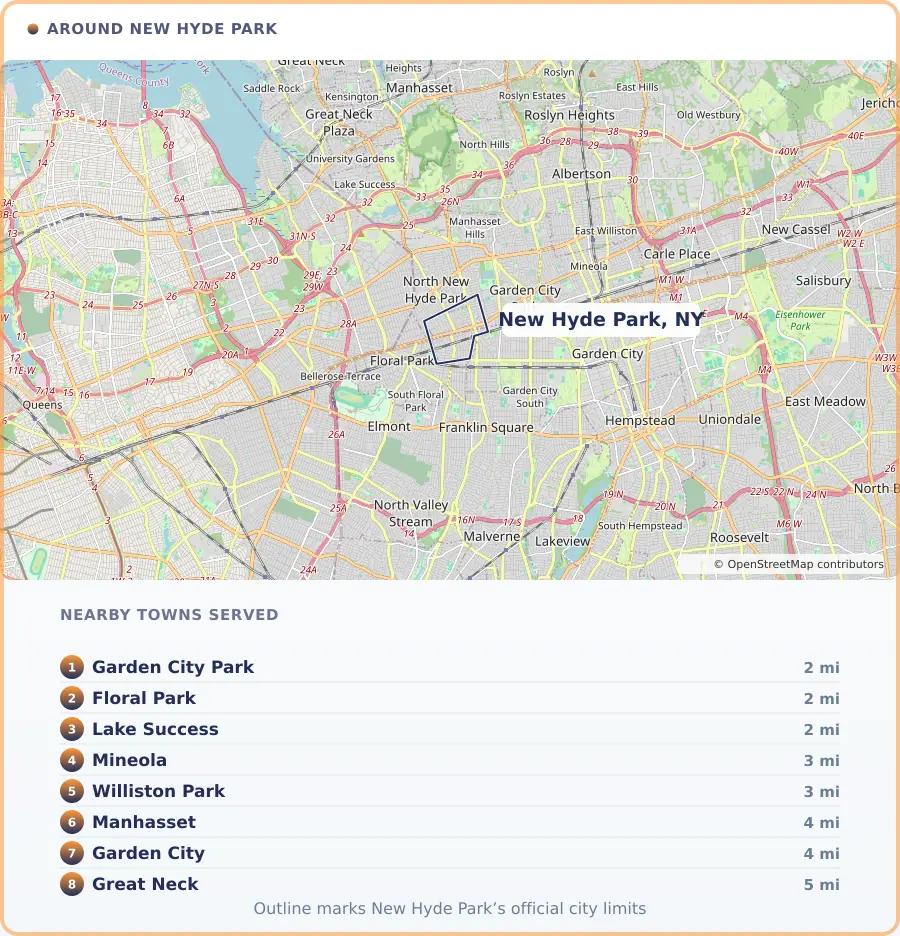
New Hyde Park, NY is the centre of the service area, which extends to 8 surrounding towns. The map shows how far that reaches.
New Hyde Park, NY Information
New Hyde Park is a compact, close-knit village in Nassau County, NY, where roughly 9,587 residents live within easy reach of both quiet residential blocks and major regional institutions. The community's identity is deeply tied to healthcare: Northwell Health's corporate headquarters sits here alongside Long Island Jewish Medical Center and Cohen Children's Medical Center, making medicine the village's economic backbone. Nearby Lake Success adds a layer of corporate office activity, rounding out a local economy that also leans on retail, education, and professional services.
Beyond the hospital campuses, everyday life here still feels distinctly suburban, shaped by strong local school districts and a steady mix of small businesses and finance-sector employers. It's a village built around service, care, and steady work, with a character grounded more in institutions than in flash.
Photo: Billy Hathorn, CC BY-SA 3.0