

Basement Mold Removal in New Hyde Park, NY
New Hyde Park's year-round humidity and winter moisture conditions create ideal circumstances for mold growth in basements, where limited ventilation and proximity to groundwater allow condensation to accumulate steadily. Basement mold removal is essential to protect indoor air quality and prevent the spread of mold throughout your home. Blair Mold Remediation connects New Hyde Park property owners with local removal providers who can assess the extent of growth and execute thorough remediation tailored to your basement's specific conditions.
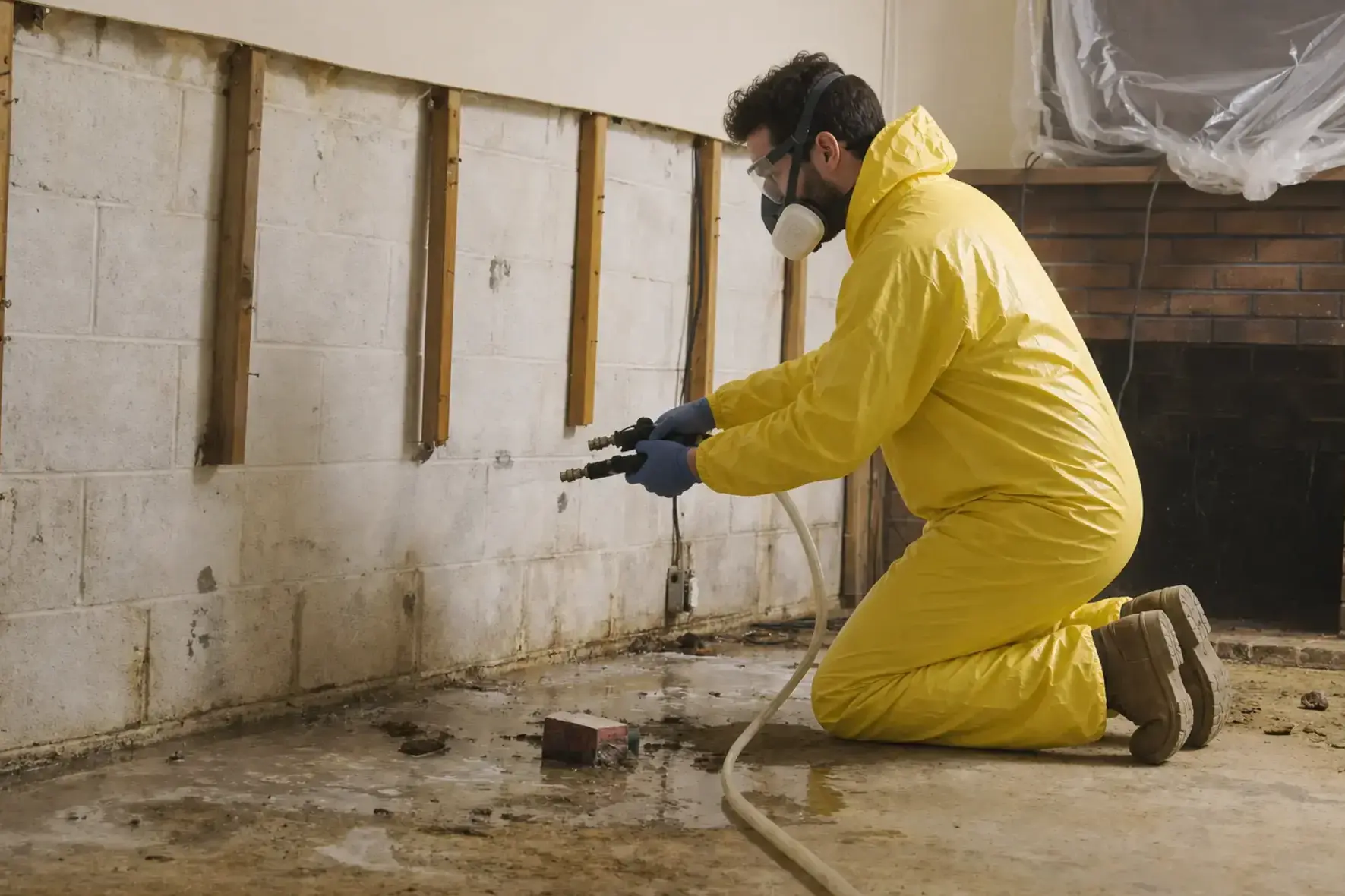
What gets cleaned in a basement, and what comes out
Two questions decide the scope of any mold job: what is it growing on, and how much of it is there. The EPA publishes an answer for both, and this is that guidance applied to the materials you would expect in a basement.
| Material | Under 10 sq ftabout a cabinet door, or one ceiling tile | 10 to 100 sq ftroughly one wall, or a small bathroom | Over 100 sq ftmore than one room's worth of surface |
|---|---|---|---|
| Concrete or cinder blockpoured or block foundation walls and the slabEPA, Table 2 | Wet vacuumHEPA vacuum | Wet vacuumHEPA vacuum | Wet vacuumHEPA vacuum |
| Wallboardfinished walls and any framed partitionsEPA, Table 2 | HEPA vacuum | HEPA vacuumRemove and discard | HEPA vacuumRemove and discard |
| Wood surfacesframing, stair stringers and stored timberEPA, Table 2 | Wet vacuumDamp wipeHEPA vacuum | Wet vacuumDamp wipeHEPA vacuum | Wet vacuumDamp wipeHEPA vacuumRemove and discard |
| Carpet and backingcarpet and pad in a finished basementEPA, Table 2 | Wet vacuumHEPA vacuum | Wet vacuumHEPA vacuumRemove and discard | Wet vacuumHEPA vacuumRemove and discard |
| Books and papersstored books, documents and cardboardEPA, Table 2 | HEPA vacuum | HEPA vacuum | HEPA vacuum |
What those methods mean, in EPA's words
- Wet vacuum
Wet vacuums are vacuum cleaners designed to collect water. They can be used to remove water from floors, carpets and hard surfaces where water has accumulated.
EPA, cleanup methods- Damp wipe
Mold can generally be removed from nonporous (hard) surfaces by wiping or scrubbing with water, or water and detergent.
EPA, cleanup methods- HEPA vacuum
HEPA (High-Efficiency Particulate Air) vacuums are recommended for final cleanup of remediation areas after materials have been thoroughly dried and contaminated materials removed.
EPA, cleanup methods- Remove and discard
Building materials and furnishings that are contaminated with mold growth and are not salvageable should be double-bagged using 6-mil polyethylene sheeting.
EPA, cleanup methods
These guidelines are for damage caused by clean water. If you know or suspect that the water source is contaminated with sewage, or chemical or biological pollutants, then Personal Protective Equipment and containment are required by OSHA.
EPA, Table 1Porous materials that are wet and have mold growing on them may have to be discarded.
EPA, cleanup methodsMold can grow on wood, drywall, carpet and furniture if they remain wet for more than 24 hours.
EPA, flood cleanup
Below-grade walls can pass moisture continuously without ever showing a leak, which is why basement mold often returns after a surface-only cleaning. Concrete and block are the forgiving part — EPA never lists them for removal at any size. The expensive part is whatever was finished or stored against them.
Nassau County carries flood events in 30 different years on the National Weather Service record, the latest in 2025 — which is a long history of water arriving somewhere it had to be dried out of.Source: NOAA Storm Events Database, Nassau County (1996-2026; Flood, Flash Flood and Coastal Flood events)
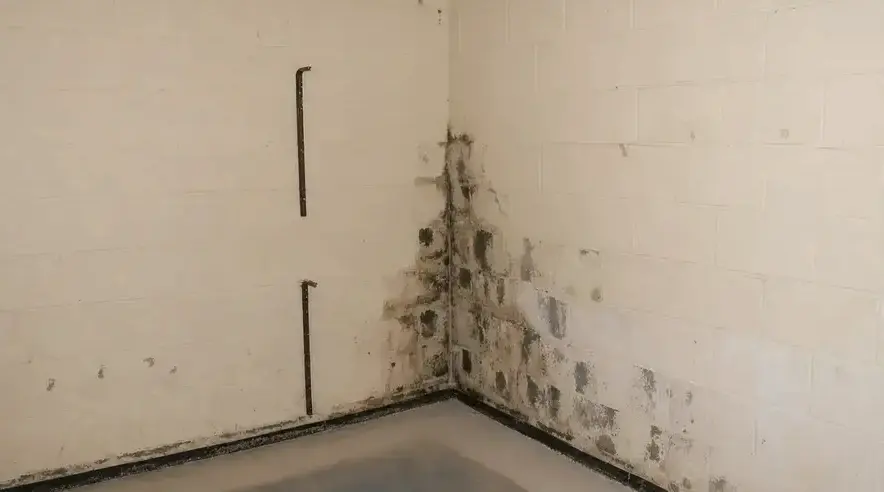
Basement Mold Removal Services for New Hyde Park Homes
New Hyde Park properties face year-round moisture challenges that make basement mold removal a practical concern for many homeowners. The region's humid Long Island climate creates persistently damp conditions, especially during summer months when moisture accumulates and winter when poor ventilation traps moisture indoors. Most homes throughout New Hyde Park were constructed with full basements, and these below-grade spaces are particularly susceptible to condensation buildup and mold growth due to limited airflow and proximity to groundwater. Without timely intervention, basement moisture problems can escalate, affecting indoor air quality and the structural integrity of the home.
Blair Mold Remediation connects New Hyde Park property owners with local providers who specialize in thorough basement mold removal. These independent professionals assess the full scope of basement contamination, identify moisture sources, and implement removal strategies tailored to your home's specific conditions. Beyond the removal itself, they address underlying dampness to reduce the likelihood of recurrence and help restore a healthier basement environment. If you've noticed signs of mold in your basement, reaching out to Blair Mold Remediation is a straightforward first step toward professional assessment and a path forward.
Why New Hyde Park Owners Choose Blair Mold Remediation
Fast Local Basement Mold Removal
Blair connects you with independent local providers who respond quickly to basement mold removal requests in New Hyde Park. Same-day or next-day service availability means your mold problem gets addressed without unnecessary delays.
Thorough Basement Mold Removal Process
The independent providers in our network handle basement mold removal with detailed inspection, containment, and removal techniques. They work to eliminate mold at its source and restore healthy indoor air quality to your home.
Clear Communication During Removal
Basement mold removal works best when you understand every step. Blair's connected providers explain findings, removal methods, and prevention measures clearly, so you stay informed from start to finish.
Basement Mold Removal for Long Island Moisture
New Hyde Park's year-round humid climate and winter dampness create ideal conditions for basement mold growth. Blair connects you with providers experienced in removing mold from basements where moisture and limited airflow combine.
How Our Basement Mold Removal Process Works
Connect with a Local Basement Mold Removal Provider
Contact Blair Mold Remediation to be matched with an independent basement mold removal specialist serving New Hyde Park. We'll connect you quickly so a provider can schedule a visit to assess your basement's condition.
Get Your Basement Inspected and Diagnosed
The mold removal provider inspects your basement to identify moisture sources, mold growth, and affected materials. In New Hyde Park's humid climate, basements are prone to condensation and mold due to limited airflow and groundwater proximity, so a thorough inspection pinpoints exactly where removal is needed.
Begin Basement Mold Removal and Restoration
Once the source of moisture is identified, the provider removes affected materials, treats contaminated surfaces, and improves ventilation to prevent future basement mold growth. Follow-up monitoring ensures the basement stays dry and mold-free going forward.
Dealing with Basement Mold Removal in New Hyde Park? Get fast, professional help.
Call Now — (516) 588-7004Basement Mold Removal Across New Hyde Park
New Hyde Park's year-round humid climate creates persistent moisture challenges in basements throughout the area. Summers bring high humidity that can saturate basement air, while winter conditions often trap dampness indoors where ventilation is limited. Most homes built in the region feature full basements, and these below-grade spaces are particularly vulnerable to condensation and mold growth. Ground moisture seeping through walls and floors, combined with poor air circulation, makes basements ideal environments for mold to develop. The proximity to groundwater and seasonal moisture fluctuations mean basement mold removal in New Hyde Park requires prompt attention to prevent the problem from spreading.
Whether your home sits in an older, established neighborhood or a more recently built area, basement conditions tend to follow similar patterns—moisture accumulates faster than it can escape. This reality makes professional basement mold removal essential for protecting indoor air quality and your property's structural integrity. Local providers who understand New Hyde Park's specific moisture patterns can assess your basement, identify the source of mold growth, and recommend removal and prevention strategies tailored to your home's construction and your basement's ventilation challenges.
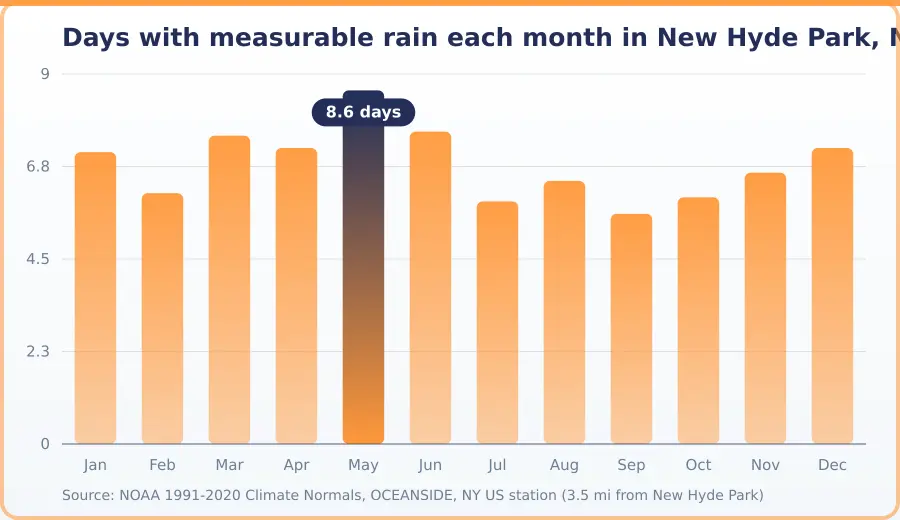
| Period | Days with measurable rain by month (days) |
|---|---|
| Jan | 7.1 |
| Feb | 6.1 |
| Mar | 7.5 |
| Apr | 7.2 |
| May | 8.6 |
| Jun | 7.6 |
| Jul | 5.9 |
| Aug | 6.4 |
| Sep | 5.6 |
| Oct | 6 |
| Nov | 6.6 |
| Dec | 7.2 |
Source: NOAA 1991-2020 Climate Normals, OCEANSIDE, NY US station (3.5 mi from New Hyde Park). Retrieved October 5, 2026.
Basement Mold Removal Across New Hyde Park Seasons
Spring: Thaw & Moisture
Spring snowmelt and increased rainfall raise groundwater levels, intensifying basement condensation and mold growth on walls, floors, and stored items. Blair Mold Remediation connects property owners to local providers who assess moisture sources and recommend removal and ventilation improvements.
Summer: Peak Humidity
Summer's elevated moisture creates ideal conditions for basement mold to spread rapidly across surfaces and into structural materials. Our referral service links homeowners with local inspectors and remediation specialists who identify active growth, contain affected areas safely, and restore indoor air quality.
Fall: Settling & Seepage
Cooling temperatures and autumn rains often drive groundwater seepage into basements, reviving dormant mold and creating new colonies in corners and foundation cracks. Blair Mold Remediation helps property owners find nearby providers equipped to remove established mold and address underlying moisture pathways before winter arrives.
Winter: Trapped Moisture
Winter's damp, poorly ventilated basement conditions—typical in many Long Island homes—allow mold to persist and worsen in stagnant air and condensation buildup. Our network connects homeowners to local removal specialists who tackle winter mold growth and improve airflow to prevent seasonal recurrence.
Related Services
Basement Mold Removal FAQs — New Hyde Park, NY
Basement mold removal begins with inspection to identify affected areas and moisture sources. The local provider will contain the mold, remove contaminated materials safely, clean and treat surfaces, and address underlying dampness—common in New Hyde Park basements due to condensation and groundwater proximity. The goal is thorough removal and preventing recurrence by controlling moisture.
Blair Mold Remediation connects property owners in New Hyde Park with local basement mold removal providers who can respond promptly to your situation. The independent providers in the network offer flexible scheduling to assess your basement and discuss removal options without unnecessary delays.
Basement mold removal costs depend on the affected area size, material type (drywall, insulation, framing), moisture source severity, and containment requirements. New Hyde Park basements often require addressing condensation or groundwater-related moisture, which influences the scope and pricing. The local provider you're connected with will assess your specific situation and explain cost factors.
Before basement mold removal, clear the area of personal items and ensure access to affected zones. The provider will guide you on ventilation setup and safety precautions. You may need to arrange temporary relocation of belongings. The local removal team will handle containment and protective measures to minimize disruption to the rest of your home.
After removal, control basement moisture by improving ventilation, using dehumidifiers during humid months, sealing cracks in foundations, and ensuring gutters and grading direct water away. New Hyde Park's year-round moisture levels make ongoing moisture management essential. The removal provider can recommend specific prevention steps based on your basement's conditions and water sources.
Basement mold can develop year-round in New Hyde Park due to consistent humidity and condensation risk, especially in winter when basements are poorly ventilated. Summer moisture and groundwater proximity also drive growth. Removal can be performed any season, but addressing the problem promptly—regardless of time of year—prevents it from worsening and affecting indoor air quality.
Homeowner Safety Toolkit
Verify Your New Hyde Park, NY Mold Remediation Company
Before you hire anyone, use these independent national resources to confirm credentials, standards, and track record.
IICRC
Publishes the S520 standard for professional mold remediation. Confirm a company's technicians hold real, current IICRC certification before you hire them.
Verify CertificationCDC
Covers the health effects of mold exposure and safe cleanup practices, separate from the remediation work itself — useful if anyone in the home has respiratory symptoms.
Mold Health GuideBBB
Look up any mold remediation company's complaint history, customer reviews, and accreditation status — a free, independent check before you hire.
Check StandingDealing with Basement Mold Removal in New Hyde Park, NY? Call (516) 588-7004 for 24/7 help.
Call Now — (516) 588-7004Areas We Serve in New Hyde Park, New York
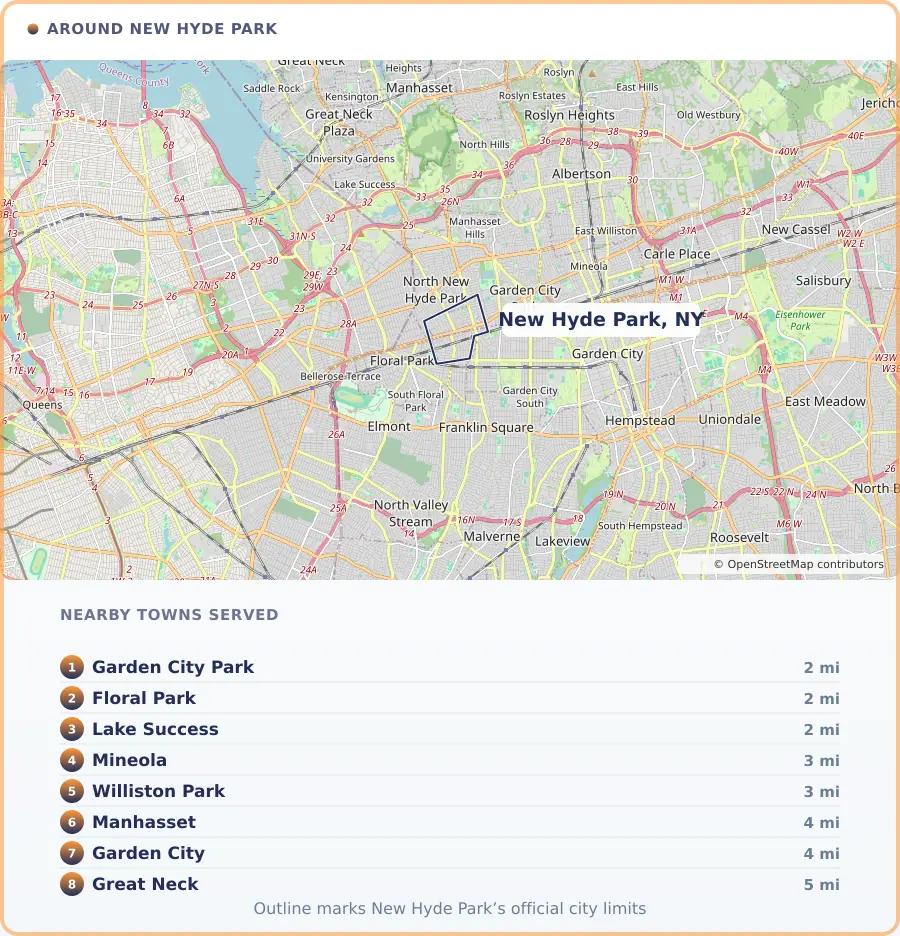
New Hyde Park, NY is the centre of the service area, which extends to 8 surrounding towns. The map shows how far that reaches.
New Hyde Park, NY Information
New Hyde Park is a compact, close-knit village in Nassau County, NY, where roughly 9,587 residents live within easy reach of both quiet residential blocks and major regional institutions. The community's identity is deeply tied to healthcare: Northwell Health's corporate headquarters sits here alongside Long Island Jewish Medical Center and Cohen Children's Medical Center, making medicine the village's economic backbone. Nearby Lake Success adds a layer of corporate office activity, rounding out a local economy that also leans on retail, education, and professional services.
Beyond the hospital campuses, everyday life here still feels distinctly suburban, shaped by strong local school districts and a steady mix of small businesses and finance-sector employers. It's a village built around service, care, and steady work, with a character grounded more in institutions than in flash.
Photo: Billy Hathorn, CC BY-SA 3.0